
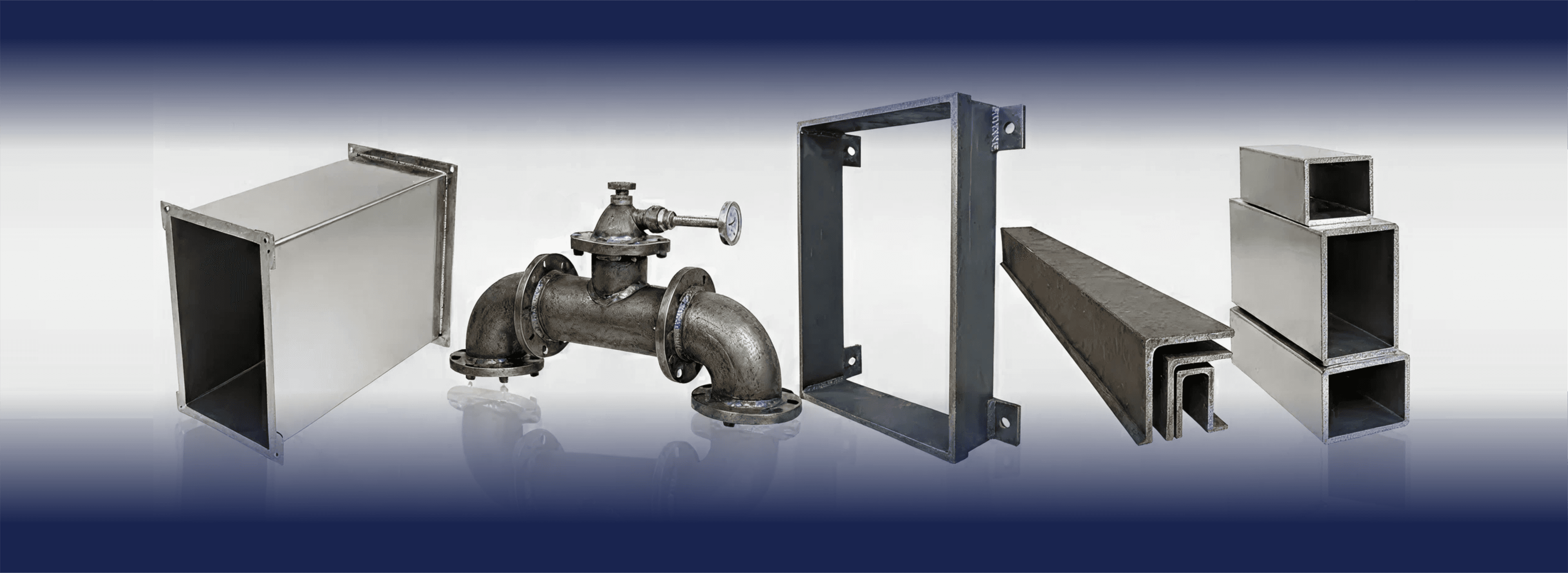
HOW ENGINEERING, FABRICATION, AND QC INTEGRATE AT JMC FABRICATION
Engineering, fabrication, and QC at JMC Fabrication work out of the same 50,000 sq ft building in Pascagoula, MS. A change in the engineering model propagates to the shop drawings, to the weld procedure, to the floor, and into the QC inspection records without leaving the building. That's the closed-loop workflow customers get on every JMC project.
What that produces: fewer field RFIs because issues get caught at engineering, faster fabrication because the floor builds from drawings tied to the source model, and a closeout package that traces every weld back to a procedure, a welder, an MTR, and a drawing revision. One source of truth, end to end.
Published May 19, 2026 · JMC Fabrication
JMC's engineering room sits inside the same 50,000 sq ft facility as the shop floor and the QC inspection bay. The engineer who detailed the spool can walk twenty steps and talk to the fitter laying it out. The QC inspector reviewing a weld map can pull the welder qualification from the same file the engineer referenced two weeks ago. That physical colocation is what makes the closed loop work.
Siloed engineering shops, where a third-party engineer details the work, hands a PDF over the wall, and a different shop builds it, lose information at every handoff. JMC doesn't have those walls. Engineering owns the model and the drawings. Fabrication owns the build. QC owns the documentation trail. All three teams share the same project file, the same revision log, and the same hallway.
On a typical job, the engineer who modeled a coordinated duct run will spot-check the first fabricated section on the floor before it ships. The QC inspector reviewing the final NDE report knows which welder ran which seam because they were standing next to the weld booth when it happened. None of that requires phone calls or emails. It's just how the building runs.
Here's how a single piece of work, a pipe spool, a duct section, a custom assembly, moves from the engineering model through to a shipped, documented deliverable:
- Engineering models the scope: In AutoCAD, Revit, or pipe isometric tools, depending on what the project needs. The model carries fabrication-level geometry: real parts, real material grades, real connection details. That model gets clash-checked against backgrounds before anything leaves engineering.
- Shop drawings get generated from the model: Dimensioned prints, weld maps, BOMs, and isos pull directly from the coordinated model. The weld map keys each numbered weld to a specific WPS (welding procedure specification), and the BOM ties each part to a material grade and an MTR.
- Weld procedures get matched to the scope: JMC's WPS library covers carbon steel, stainless steel, galvanized steel, and copper across the processes the shop runs. Engineering selects the WPS that fits the material and joint geometry. The welder running the seam is qualified to that procedure, and the qualification record sits in QC's file.
- Fabrication builds from the released drawing set: The shop floor works from current-revision shop drawings only. Material gets cut from MTR-traceable stock. Welders run the called-out WPS. Fitters use the iso to lay out the assembly. Everything ties back to the drawing.
- In-process QC verifies as fabrication runs: Fit-up inspections happen before welding. Visual inspection happens after welding. Dimensional checks happen before final assembly. The inspection records get logged against the specific drawing revision and weld map number, not against a generic project file.
- Final QC and NDE close the loop: Depending on the spec, final QC includes dye penetrant, radiographic, or ultrasonic testing. Each test report references the weld map, the welder, the WPS, and the drawing rev. Once final NDE is signed off, the assembly is released to ship.
Every handoff between engineering, fabrication, and QC carries a verification step. Engineering to fabrication: the shop floor confirms the released drawing set is current revision, the material is in stock and MTR-traceable, and the WPS is correct for the material and welder. Fabrication to QC: the shop confirms the assembly matches the drawing, dimensions are within tolerance, and the weld map is complete. QC back to engineering: any nonconformance triggers an engineering review before disposition.
Those verifications aren't a stack of sign-off sheets nobody reads. They're the cheap insurance that catches the small errors before they become expensive ones. A wrong WPS on a weld map costs five minutes to fix in engineering and weeks to fix if it shows up in field NDE.
Customers comparing JMC against a shop that outsources engineering, or against a design firm that subs fabrication, see meaningful differences in how the project actually runs:
| Workflow Stage | Colocated (JMC) | Siloed Engineering + Outside Shop |
|---|---|---|
| Drawing handoff | Engineer walks the print to the floor, talks through it with the fitter | PDF emailed, fitter interprets without context |
| RFI response time | Hours, often in person | Days to weeks through PM channels |
| Revision propagation | Model updates, drawings reissue, floor gets the new set the same day | Engineer revises, sends to fabricator, fabricator reprints, floor may work on the wrong rev for days |
| QC reference to engineering intent | QC inspector pulls model and drawing from same file | QC inspector works from PDFs, engineer is offsite if questions arise |
| Nonconformance disposition | Engineer reviews on the floor with QC and fabrication, decision in one meeting | Email chain across three companies, decision in days |
| Closeout package assembly | Drawings, MTRs, weld logs, NDE all already cross-referenced | Each party compiles separately, customer reconciles across three sources |
The most common nonconformances on fabrication projects aren't dramatic. They're small misreads. A welder runs the wrong WPS because the weld map called out a default he wasn't paying close attention to. A fitter cuts a piece an eighth too long because he read the dimension off a superseded rev. A QC inspector flags a weld for porosity that the engineer would've recognized as acceptable per the project spec if asked.
Every one of those gets caught in a colocated workflow because somebody from the right team is within walking distance. The welder asks the engineer about the WPS before he strikes an arc. The fitter checks with the engineer whether he's on the current rev before he makes the cut. The QC inspector walks the weld over to the engineer's desk for a five-minute review instead of waiting on an email.
Across a hundred-spool job, those small intercepts add up. They're the difference between a fabrication scope that ships clean and one that ships with a punch list. JMC's customers in marine, oil and gas, and commercial HVAC see that as a schedule predictability advantage as much as a quality one.
Every project flows into a single documentation pipeline that produces the closeout binder customers need for handoff. The pipeline includes:
- Source model (AutoCAD, Revit, or pipe iso) with revision history
- Released shop drawing set keyed to model revisions
- Weld map tying every numbered weld to a WPS and welder
- WPS/PQR library covering the materials and processes on the job
- Welder qualification records, current AWS or NAVSEA where applicable
- MTRs for every length of pipe, plate, sheet, and structural shape
- In-process and final QC inspection records logged against the weld map
- NDE reports (visual, dye penetrant, radiographic, ultrasonic) per spec
- Nonconformance reports and dispositions where applicable
- Final as-built drawings reconciled against what shipped
The closed loop isn't just engineering feeding fabrication and fabrication feeding QC. It runs both ways. When QC catches a recurring issue, say, a weld access detail that consistently produces porosity, the inspector flags it to engineering. Engineering reviews the drawing and the WPS, adjusts the joint geometry or the procedure, and the next job runs cleaner.
That kind of feedback never happens cleanly when engineering and QC are at different companies. The QC inspector at an outside shop has no path to tell the original engineer their detail is hard to weld. At JMC, that conversation happens at the inspection bay or on the floor, often inside the same project. The improvement shows up on the next assembly, not the next contract.
Does JMC do any engineering work for other fabricators, or only on JMC's own projects?
JMC's engineering team works on JMC fabrication projects. The integration with the shop and QC is what makes the workflow work, so the engineering team doesn't sub out detailing services to other fabricators. Customers who want JMC's engineering capability typically engage JMC for the fabrication scope as well.
How does JMC handle a nonconformance that comes up during fabrication?
The shop flags the nonconformance, QC documents it, and engineering reviews it within the same project file. Disposition options include repair to the original spec, rework to a modified spec with engineering sign-off, accept-as-is if the deviation doesn't affect function, or scrap and remake. The disposition gets logged in the closeout package, so the customer sees exactly what happened and how it was resolved.
What certifications does JMC hold for the engineering-to-QC pipeline?
JMC carries AWS welder certifications, NAVSEA welding certification for naval and marine work, and SMACNA compliance for duct fabrication. Welder qualifications are renewed and tracked in QC's file. The certifications govern which procedures qualified welders can run, and the documentation flows into closeout packages where the project spec requires it.
Can engineering changes happen after fabrication has started?
Yes, and they do on most projects. Engineering issues a revision, the affected drawings reissue, the shop floor gets the updated set, and QC's inspection records reference the new rev. Work already completed against the prior rev gets reviewed for compatibility. If the change doesn't affect already-built pieces, fabrication continues on the new rev. If it does, the impacted scope gets reworked.
How does the closeout package get delivered to the customer?
Standard delivery is a single PDF binder organized by section: drawings, BOM, WPS/PQR, welder quals, MTRs, weld logs, NDE reports, revision history. Customers who need physical hard copies get printed binders. Customers who want native files for their own document control receive the source PDFs plus DWG and RVT where applicable.
Does JMC do field installation, or only shop fabrication?
JMC's scope is shop fabrication and delivery. Field installation is typically handled by the GC's mechanical contractor or the customer's own crew. JMC's engineering team supports field installation through RFI response and as-built documentation, but the work itself ships from the Pascagoula shop ready to install.
What's the smallest project size where JMC's integrated engineering workflow makes sense?
There's no hard floor. A single custom handrail or a one-off repair spool runs through the same engineering, fabrication, and QC pipeline as a multi-thousand-foot mechanical scope. The depth of documentation scales with project requirements, a small custom piece might get a one-sheet drawing and a basic weld log, while a NAVSEA marine job gets the full closeout binder. The workflow itself is the same.