
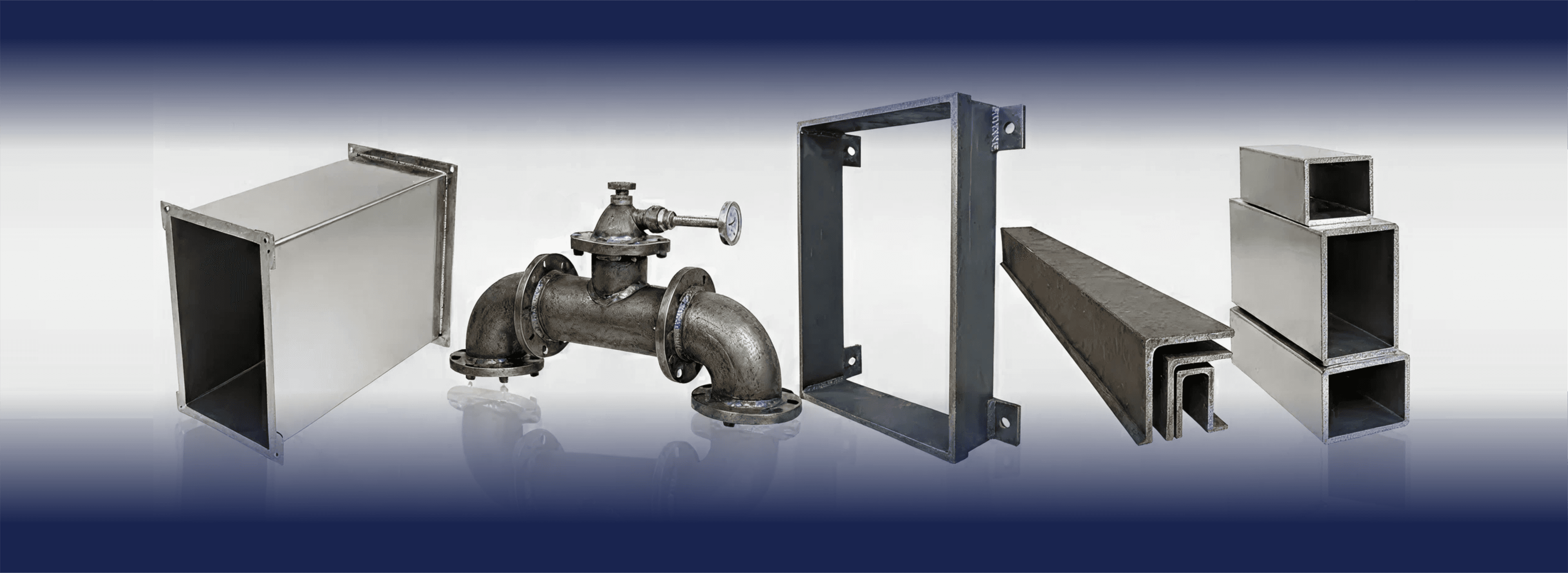
HOW DO YOU DESIGN A STEEL FABRICATION FOR HOT-DIP GALVANIZING?
Hot-dip galvanizing means dipping a finished steel fabrication in molten zinc at about 840°F. The zinc bonds to the steel inside and out, which is why it protects so well. It's also why the fabrication has to be designed for the dip: zinc and cleaning solutions have to flow in, air has to get out, and everything has to drain.
Most galvanizing problems, like bare spots, trapped acid weeping rust, warped plate, and even burst tubes, trace back to details that were never on the shop drawings. They're cheap to fix at the design stage and expensive to fix after the part comes out of the kettle.
Published September 24, 2026 · JMC Fabrication
A fabrication headed for galvanizing gets degreased, pickled in acid to remove mill scale and rust, fluxed, and then dipped in molten zinc. Fabricated steel products are typically galvanized to ASTM A123, which sets minimum coating thickness by material thickness. Bolts and small hardware usually fall under ASTM A153.
Because the whole piece goes into each tank, every enclosed space has to be reachable by every liquid and drainable afterward.
- Vent and drain holes in every hollow section — Tube, pipe, and closed box sections need holes so zinc can flow in and air can escape, placed at opposite ends and corners when the piece is hung. It's also a safety issue: a sealed section with trapped moisture can burst in molten zinc. Size and place holes following ASTM A385 and your galvanizer's guidance.
- Watch overlapping and lapped surfaces — Where two plates overlap, cleaning acid can get trapped in the gap and weep out later as rust streaks. Seal-weld the lap all the way around, or leave a real gap that the solutions can flow through and drain from. Big overlaps usually need a vent hole of their own.
- Fit the kettle — Kettles have fixed dimensions, and they vary by galvanizer. Check the kettle size before finalizing large assemblies. Pieces slightly too long can sometimes be double-dipped, but it's better to design splice points that keep each piece inside one dip.
- Design against distortion — Galvanizing temperature can release welding stresses and warp thin or unbalanced assemblies. Symmetrical designs, similar material thicknesses across joints, and balanced weld sequences all help. Thin plate on a heavy frame is the classic warp risk.
- Keep the surface clean of what pickling won't remove — Acid removes rust and mill scale. It doesn't remove weld slag, paint, oil-based markers, grease, or anti-spatter compounds. Those spots come out bare. Use water-soluble markers and clean welds before shipping to the galvanizer.
- Plan for threads and moving parts — Zinc builds up on threads and in tight clearances. Internal threads usually get tapped after galvanizing, and hinges or moving parts need extra clearance so they don't fuse shut.
The silicon and phosphorus content of the steel changes how the zinc reacts. Some chemistries produce a thick, dull gray coating instead of a bright, spangled one. It's still fully protective, but it can surprise an owner expecting a uniform shiny finish. On architectural or exposed work where appearance matters, it's worth talking about steel sourcing and finish expectations up front.
It's better to galvanize after all welding is done. When a field weld on galvanized steel can't be avoided, the zinc has to be removed from the weld area first, and the zinc fumes need proper ventilation and respiratory protection. Afterward, the damaged coating gets repaired with zinc-rich paint, zinc spray, or solder per ASTM A780.
For assemblies that have to be joined on site, bolted connections designed at the start usually beat field welding galvanized steel.
Galvanizing protects best when the fabrication is detailed for it: vented and drained sections, sealed or open laps, pieces that fit the kettle, balanced designs, clean surfaces, and joining plans that avoid welding over zinc.
When JMC Fabrication builds carbon or structural steel headed for hot-dip galvanizing, those details get settled on the shop drawings before anything is cut, out of a 50,000 sq ft shop in Pascagoula, MS serving the Gulf Coast.
This article supports the following JMC capabilities: